


The United States is the global hub of technological innovation, home to Silicon Valley and leading research institutions shaping the future of IT. For Nepali students eager to build a career in information technology, pursuing top IT courses in the USA offers unparalleled opportunities.
American universities lead in research on artificial intelligence, quantum computing, cybersecurity, and more. Internships with global tech giants like Google and Microsoft provide real-world experience, while the entrepreneurial culture fosters creativity and innovation. Graduates enjoy competitive salaries, with average IT salaries projected at $113,000 in 2025, plus access to up to 36months of Optional Practical Training (OPT) for work experience after graduation.
This guide covers why to study IT in the USA, popular specializations, top universities, application processes, scholarships, work opportunities, career prospects, and how GlobalSelect supports Nepali students.
US universities invest heavily in advanced technologies such as AI and cybersecurity. Students learn from leading researchers and participate in hands-on projects that push technological boundaries beyond classroom theory.
Internships with major tech companies allow students to work on products impacting millions worldwide. This practical exposure complements rigorous academics and enhancese employablity.
The US fosters innovation through startup incubators, mentorships, and venture capital access, ideal for Nepali students aiming to launch tech ventures or develop new solutions while studying or after graduation.
These universities combine academic excellence with industry ties that boost career prospects.
Key steps include:
Early preparation is essential due to competitive admission processes.
Tuition varies by university but typically ranges from $30,000 to $60,000 per year for graduate programs. Living expenses, including housing, food, and health insurance, average $15,000–$20,000 annually depending on location.
Nepali students can explore:
Proper scholarship guidance can significantly reduce education costs.
Students can work up to 20 hours/week on campus during semesters and full-time during breaks.
Curricular Practical Training (CPT) allows paid internships related directly to your program curriculum while studying.
Optional Practical Training (OPT) provides 12 months of work authorization post-degree; STEM OPT extension adds an additional 24 months for eligible fields—totaling up to 36months of practical experience in the US tech industry.
Many graduates transition from OPT/STEM OPT to H-1B specialty worker visas via a lottery system favoring advanced degree holders from US universities.
High-demand roles with average annual salaries (2025 data):
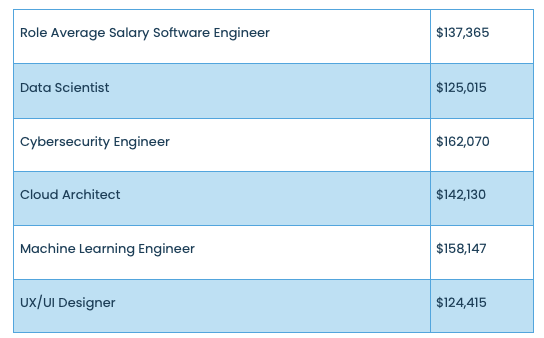
Salaries vary by region; tech hubs like Silicon Valley offer premiums of 20–30%. Entry-level roles often begin during OPT internships, progressing rapidly into specialized positions within a few years.
Global Select Nepal provides comprehensive consultancy services including:
With expert support throughout your study abroad journey—from application through career placement GlobalSelect helps Nepali students realize their ambitions in the US IT sector.
Studying IT in the USA offers Nepali students unmatched academic rigor combined with practical training opportunities that pave the way for lucrative global careers in technology’s fastest-growing fields. With careful planning and professional guidance from trusted consultants like Global Select Nepal, you can successfully navigate this exciting path toward becoming a future leader in information technology.

Discover why Flinders University is a top choice for a Bachelor of Information Technology. From industry-connected learning to specialisations like cybersecurity and AI, unlock your tech career today!

Thinking of studying in Australia? Discover why Flinders University in Adelaide is a top pick for Nepalese students. With a strong focus on innovation, inclusion, and global impact, Flinders offers future-ready programs, a supportive international community, and real-world career opportunities. Read on to learn how Flinders can shape your future—and how Global Select can help you get there.

Did you know that as of May 2023, there are more than 130,000 Nepalis currently residing in Australia, with nearly 60,000 of them being students?
| Course | Bachelor’s Degree | Master’s Degree | Requirements or Considerations | English Language Proficiency (IELTS/TOEFL) | Tuition Fees (per year for international students) | Top Universities |
|---|---|---|---|---|---|---|
Nursing | 3 years | 1-2 years | Clinical placements required; may need specific health immunizations. | Minimum IELTS 6.5; TOEFL 79-93. | AUD $30,000 - $45,000 | University of Sydney, University of Melbourne, Monash University |
Information Technology | 3-4 years | 1-2 years | May require programming skills or prior coursework in IT. | Minimum IELTS 6.5; TOEFL 79-93. | AUD $30,000 - $50,000 | Australian National University, University of New South Wales, University of Melbourne |
Accounting | 3 years | 1-2 years | Need to meet accreditation standards by professional bodies. | Minimum IELTS 6.5; TOEFL 79-93. | AUD $30,000 - $40,000 | University of Melbourne, University of Sydney, University of Queensland |
Engineering (various fields) | 4 years | 1-2 years | Strong background in mathematics and physics required. | Minimum IELTS 6.5; TOEFL 79-93. | AUD $35,000 - $45,000 | University of New South Wales, University of Sydney, Monash University |
Social Work | 4 years | 1-2 years | Practical experience or placements required. | Minimum IELTS 7.0; TOEFL 94-101. | AUD $28,000 - $40,000 | University of Melbourne, University of Sydney, University of Queensland |
Education (various fields) | 4 years | 1-2 years | A police clearance and working with children check required. | Minimum IELTS 7.0; TOEFL 94-101. | AUD $28,000 - $35,000 | University of Melbourne, University of Sydney, Monash University |
Psychology | 3 years | 1-2 years | Requires strong research and psychological theory understanding. | Minimum IELTS 7.0; TOEFL 94-101. | AUD $30,000 - $45,000 | University of Sydney, University of New South Wales, University of Queensland |
Occupational Therapy | 3-4 years | 1-2 years | May require pre-registration or relevant clinical experience. | Minimum IELTS 7.0; TOEFL 94-101. | AUD $30,000 - $45,000 | University of Queensland, University of Sydney, Curtin University |
Architecture | 3-4 years | 2 years | Includes technical and creative coursework, portfolio may be required. | Minimum IELTS 6.5; TOEFL 79-93. | AUD $35,000 - $50,000 | University of Sydney, University of Melbourne, Monash University |
Medicine and Health Sciences | 5-6 years | 2-4 years | Highly competitive entry, includes clinical placements and internships. | Minimum IELTS 7.0; TOEFL 94-101. | AUD $45,000 - $70,000 | University of Melbourne, University of Sydney, Australian National University |
| State/Territory | Subclass 190 (Skilled Nominated Visa) | Subclass 491 (Skilled Work Regional (Provisional) Visa) |
|---|---|---|
| New South Wales (NSW) | Required for some occupations | Required for some occupations and regions |
| Victoria (VIC) | Required | Required |
| Queensland (QLD) | Not typically required, conditions apply | Required for some occupations and regions |
| South Australia (SA) | Not typically required, conditions apply | Required for some occupations and regions |
| Western Australia (WA) | Not typically required | Not typically required |
| Tasmania (TAS) | Not typically required, conditions apply | Not typically required, conditions apply |
| Northern Territory (NT) | Not typically required | Not typically required |
| Australian Capital Territory (ACT) | Required, uses Matrix system | Required, uses Matrix system |
Claim your
from us!

Copyright © 2025, Global Select Education and Migration Services. All Rights Reserved. MARN: 2217810, 2418520 | PAN: 610211842
